



Histamine Receptor
Histamine Receptors are a class of G protein-coupled receptors with histamine as their endogenous ligand. There are four known histamine receptors: H1 receptor, H2 receptor, H3 receptor, H4 receptor. The H1 receptor is a histamine receptor belonging to the family of Rhodopsin-like G-protein-coupled receptors. This receptor, which is activated by the biogenic amine histamine, is expressed throughout the body, to be specific, in smooth muscles, on vascular endothelial cells, in the heart, and in the central nervous system. H2 receptors are positively coupled to adenylate cyclase via Gs. It is a potent stimulant of cAMP production, which leads to activation of Protein Kinase A. Histamine H3 receptors are expressed in the central nervous system and to a lesser extent the peripheral nervous system, where they act asautoreceptors in presynaptic histaminergic neurons, and also control histamine turnover by feedback inhibition of histamine synthesis and release. The Histamine H4 receptor has been shown to be involved in mediating eosinophil shape change and mast cell chemotaxis.
Histamine Receptor Isoform Specific Products
All Product Categories
-
Histamine Receptor Inhibitors
(197)
View all products
-
Histamine Receptor Agonists
(66)
View all products
-
Histamine Receptor Antagonists
(495)
View all products
-
Histamine Receptor Activators
(5)
View all products
-
Histamine Receptor Modulators
(20)
View all products
-
Histamine Receptor Controls
(9)
View all products
-
Histamine Receptor Ligands
(2)
View all products
-
Histamine Receptor Related Products (860)
Related Products (860)

-
Antibodies (2)
-
Histamine Receptor Isoform Comparison
-
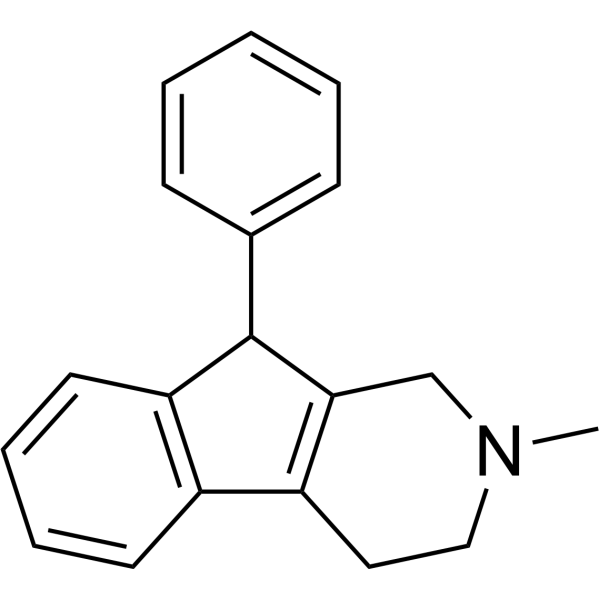
Terfenadine N-oxide
 0 ImagesCat. No.: HY-133727CAS No.: 634901-83-0Terfenadine N-oxide, an N-oxide derivative of Terfenadine (HY-B1193), is a histamine H1 receptor antagonist (IC50 = 2.73 μM) and an hERG potassium channel inhibitor (IC50 = 0.698 μM). Terfenadine N-oxide is can be used for the research of histamine-related allergic diseases and hERG channel-associated arrhythmias.
-
Cinnarizine-d8
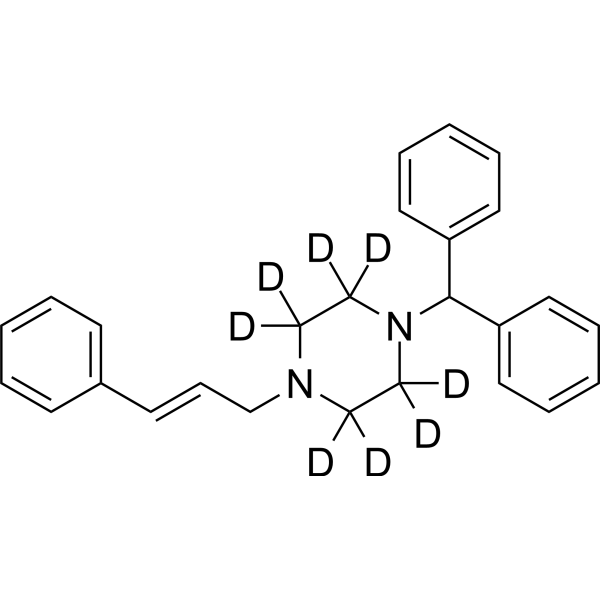 0 ImagesCinnarizine-d8 is a deuterium labeled Cinnarizine. Cinnarizine is an antihistamine and a calcium channel blocker.
-
AHR-13268D
 0 ImagesCat. No.: HY-123432CAS No.: 130838-11-8AHR-13268D is an oral active antiallergic and antihistaminic agent, with bioavailable approximately 88%. AHR-13268D is a potent inhibitor of histamine release from rat peritoneal mast cells, with the IC50 of 0.51 nM.

-
Cyproheptadine-d3
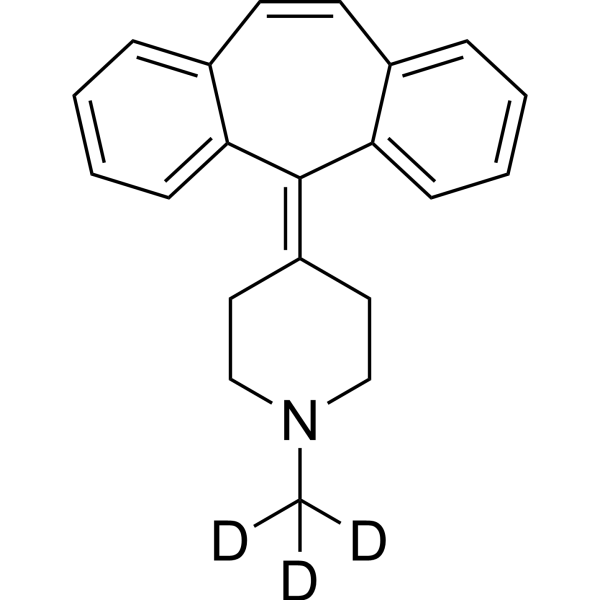 0 ImagesCat. No.: HY-B1622SCAS No.: 2712455-05-3Cyproheptadine-d3 is the d3-labeled Cyproheptadine (HY-B1622). Cyproheptadine acts as a p38 MAP kinase activator, CHK2 activator, histamine H1 receptor inhibitor and serotonin receptor inhibitor. Cyproheptadine mediates cell cycle arrest via G1 phase arrest, G1/S transition arrest, G0/G1 phase arrest, reduced expression of cyclins D1/D2/D3, upregulated expression of HBP1, p16, p21, p27, and decreased phosphorylation of retinoblastoma protein. Cyproheptadine induces Apoptosis by increasing PARP and cleaved PARP, as well as activating the mitochondrial caspase pathway. Cyproheptadine inhibits tumor growth with extremely low toxicity to normal cells. Cyproheptadine can be used in research related to hepatocellular carcinoma, multiple myeloma and acute myeloid leukemia.
-
KSK94
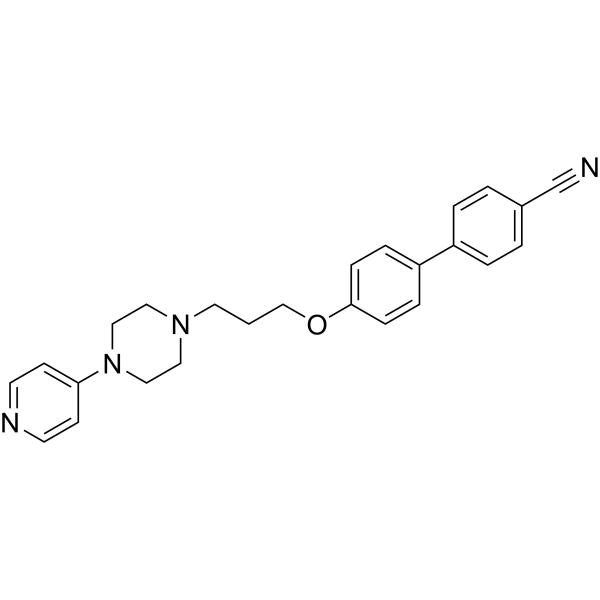 0 ImagesCat. No.: HY-155616CAS No.: 2566716-07-0KSK94 is a high-affinity histamine H3 receptor antagonist, with Kis of 7.9, 2958, 75.2 nM for H3 receptor, sigma-1, sigma-2 receptor respectively. KSK94 can be used for research of nociceptive and neuropathic pain.
-
Panaxydiol
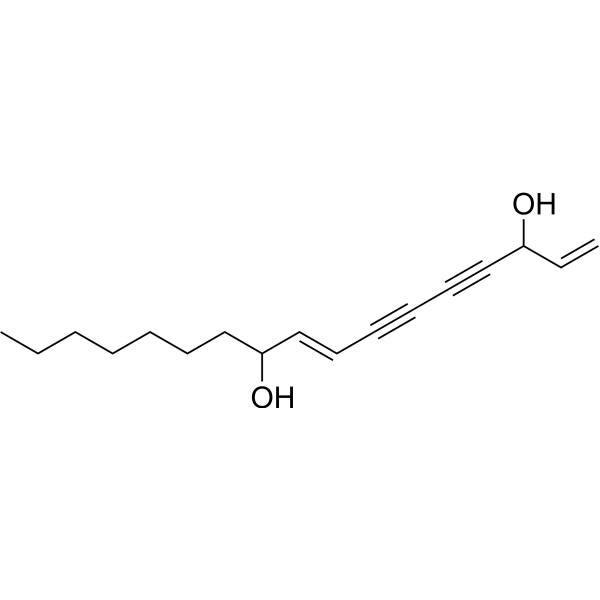 0 ImagesCat. No.: HY-N3114CAS No.: 63910-76-9Panaxydiol exhibits histamine-release inhibition activity. Panaxydiol is a click chemistry reagent, it contains an Alkyne group and can undergo copper-catalyzed azide-alkyne cycloaddition (CuAAc) with molecules containing Azide groups.
-
Mifentidine
 0 ImagesCat. No.: HY-19007CAS No.: 83184-43-4Synonyms: DA 4577Mifentidine (DA 4577) is a potent and selective H2 Receptor antagonist. Mifentidine has an anti-secretion effect and can antagonize the acid-promoting activity of histamine with EC50 3.28 μM.
-
8 Hydroxy PIPAT oxalate
 0 ImagesCat. No.: HY-101225CAS No.: 1451210-48-28 Hydroxy PIPAT oxalate is a 5-HT1A receptor agonist that promotes histamine release. 8 Hydroxy PIPAT oxalate selectively activates 5-HT1A receptors, thereby triggering mast cell degranulation and histamine release. 8 Hydroxy PIPAT oxalate is applicable to research related to irritable bowel syndrome.
-
Methimepip dihydrobromide
 0 ImagesCat. No.: HY-107554CAS No.: 817636-54-7Methimepip dihydrobromide is a potent and selective histamine H3 receptor agonist with an EC50 of 0.316nM.
-
Oxomemazine (Standard)
 0 ImagesCat. No.: HY-136587RCAS No.: 3689-50-7Oxomemazine (Standard) is the analytical standard of Oxomemazine (HY-136587). This product is intended for research and analytical applications. Oxomemazine is a phenothiazine-based histamine H1-receptor blocker. Oxomemazine is a selective antagonist for muscarinic M1 receptor, displays about 20-fold difference in the affinity for high (Ki = 84 nM, M1 receptor) and low (Ki = 1.65 μM, M2 receptor) affinity sites. Oxomemazine is an antihistamine and anticholinergic agent used for the study of cough treatment. Oxomemazine is protective against anaphylactic microshock in guinea pigs.
-
Dihexyverine hydrochloride
 0 ImagesDihexyverine hydrochloride is a compound belonging to the amino alcohol ester class. Dihexyverine hydrochloride possesses anticholinergic, smooth muscle relaxant, antihistaminic, and antiemetic effects. Dihexyverine hydrochloride can also shorten the duration of labor. Dihexyverine hydrochloride can be used in research related to gastrointestinal spasms, obstetrics, and other fields.
-
Norzine dimalate
 0 ImagesCat. No.: HY-A0188CAS No.: 52239-63-1Synonyms: Thiethylperazine dimalateNorzine dimalate (Thiethylperazine dimalate), a Phenothiazine (HY-Y0055) derivate, is an orally active and potent dopamine D2-receptor and histamine H1-receptor antagonist. Norzine dimalate is also a selective ABCC1activator that reduces amyloid-β load in mice. Norzine dimalate has anti-emetic, antipsychotic and antimicrobial effects.
-
ICI 162846
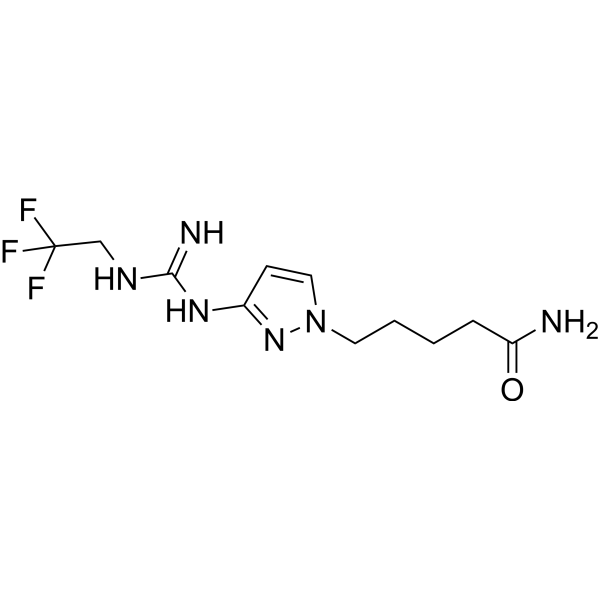 0 ImagesCat. No.: HY-101234CAS No.: 84545-30-2ICI 162846 is an orally active antagonist of H2 receptor. ICI 162846 inhibits acid production accompanied by an increase in the secretion of histamine in chronic duodenal ulcer (CDU) models. ICI 162846 is effective in preventing CDU.
-
Levodropropizine-d8
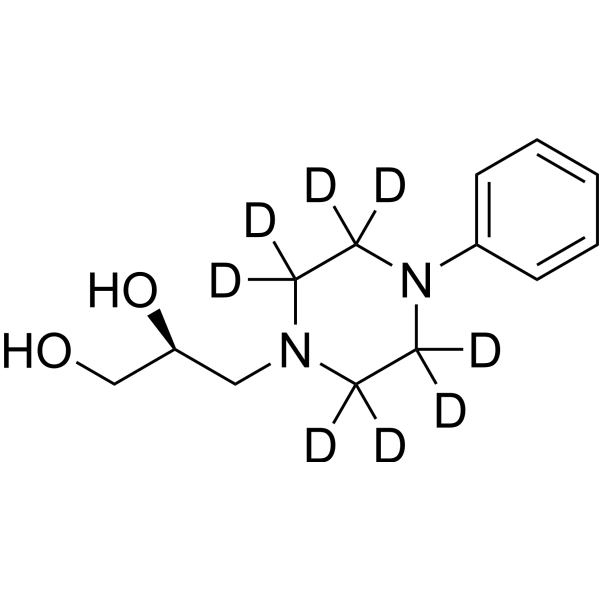 0 ImagesCat. No.: HY-B1895SSynonyms: (S)-(-)-Dropropizine-d8; DF-526-d8Levodropropizine-d8 is deuterium labeled Levodropropizine. Levodropropizine (DF-526) is a histamine receptor inhibitor, Levodropropizine is an effective and very well tolerated peripheral antitussive agent.
-
H3R antagonist 6
 0 ImagesCat. No.: HY-175367CAS No.: 2183338-59-0H3R antagonist 6 (Compounds 3) (H3-2406) is a Histamine receptor 3 (H3R) antagonist with an IC50 of 5.6 nM. H3R antagonist 6 labeled with 18F has high radiochemical yield, molar activity and moderate brain uptake, but with an off-target binding to the Sigma-1 receptor. H3R antagonist 6 can be used as a PET radioligand for positron emission tomography imaging for central nervous system (CNS) disorders research.
-
Cipralisant (enantiomer)
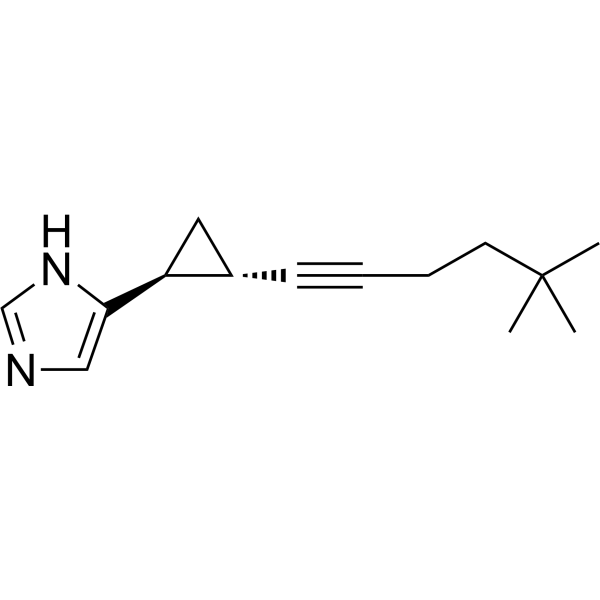 0 ImagesCat. No.: HY-106993BCAS No.: 223420-11-9Synonyms: GT-2331 (enantiomer)Cipralisant (GT-2331) enantiomer is the enantiomer of Cipralisant (HY-106993), Cipralisant is an orally active, potent, selective, and high affinity histamine H3 receptor antagonist (rat Ki=0.47 nM). Cipralisant (enantiomer) is a click chemistry reagent, it contains an Alkyne group and can undergo copper-catalyzed azide-alkyne cycloaddition (CuAAc) with molecules containing Azide groups.
-
Benztropine-d3 mesylate
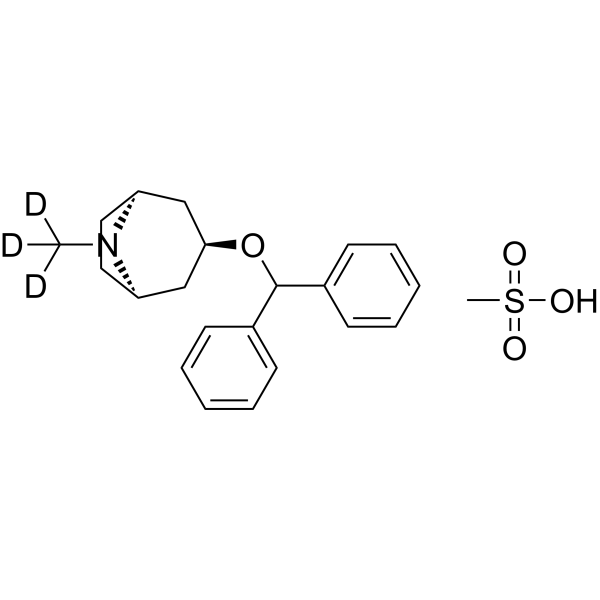 0 ImagesCat. No.: HY-B0520AS1CAS No.: 202529-16-6Benztropine-d3 (mesylate) is the deuterium labeled Benztropine mesylate. Benztropine mesylate (Benzatropine mesylate) is an orally active centrally acting anticholinergic agent that can be used for Parkinson's disease research. Benztropine mesylate is an anti-histamine agent and a dopamine re-uptake inhibitor. Benztropine mesylate is also a human D2 dopamine receptor allosteric antagonist. Benztropine mesylate also has anti-CSCs (cancer stem cells) effects.
-
Famotidine (GMP)
 0 ImagesCat. No.: HY-B0377GCAS No.: 76824-35-6Synonyms: MK-208 (GMP)Famotidine GMP (MK-208 GMP) is Famotidine (HY-B0377) produced in GMP guideline. Famotidine is an orally active and highly selective histamine H2 receptor antagonist. It inhibits gastric acid secretion by blocking the Gs signaling pathway, and regulates intracellular cAMP and ERK pathways. Famotidine inhibits TLR3-mediated inflammatory pathways, and reduces the expression of various inflammatory mediators and interferon-related genes. Famotidine scavenges DPPH and nitric oxide free radicals, alleviates oxidative stress damage in gastric tissue, inhibits proMMP-9, improves vascular endothelial permeability, and restores the normal physiological functions of neutrophils and eosinophils. Famotidine crosses intestinal epithelial cells via facilitated diffusion and passive diffusion, blocks paracellular cation transport, and increases intestinal transepithelial electrical resistance. Famotidine reduces serum levels of transaminases and alkaline phosphatase, exerts analgesic effects and gastric protective effects simultaneously. Famotidine can be used in studies related to COVID-19, liver injury and acute gastric ulcer.




